

Industries Article
Multifamily insurance: traditional premium vs. plus aggregate
An illustrative comparison shows why multifamily owners should evaluate retained losses alongside premium when considering a plus aggregate structure.


Updated October 2, 2026.
Insurance decisions affect a multifamily portfolio’s operating budget and the amount of loss it must fund itself. Comparing premium alone can miss an important part of that decision.
The original Virtus article used a hypothetical portfolio to compare a traditional deductible program with a $1 million plus aggregate structure. The example is a way to explore the tradeoff between premium and retained risk, not a forecast or a client result.
What changes with a plus aggregate?
In the structure illustrated here, the owner funds an agreed layer of losses in addition to paying the insurer’s premium. Favorable loss experience can leave more of that allocation unused. Higher losses consume it.
The actual contract determines which losses enter the aggregate, how individual deductibles interact with it, how it is funded, and what happens after it is exhausted. The selected aggregate should not be described as a cap on every cost or uninsured exposure the owner could face.
The original six-year illustration
The model considers a hypothetical 7,000-unit portfolio with $950 million in total insured value across the Midwest and Sun Belt. It compares a traditional deductible program with a $1 million plus aggregate over six years.
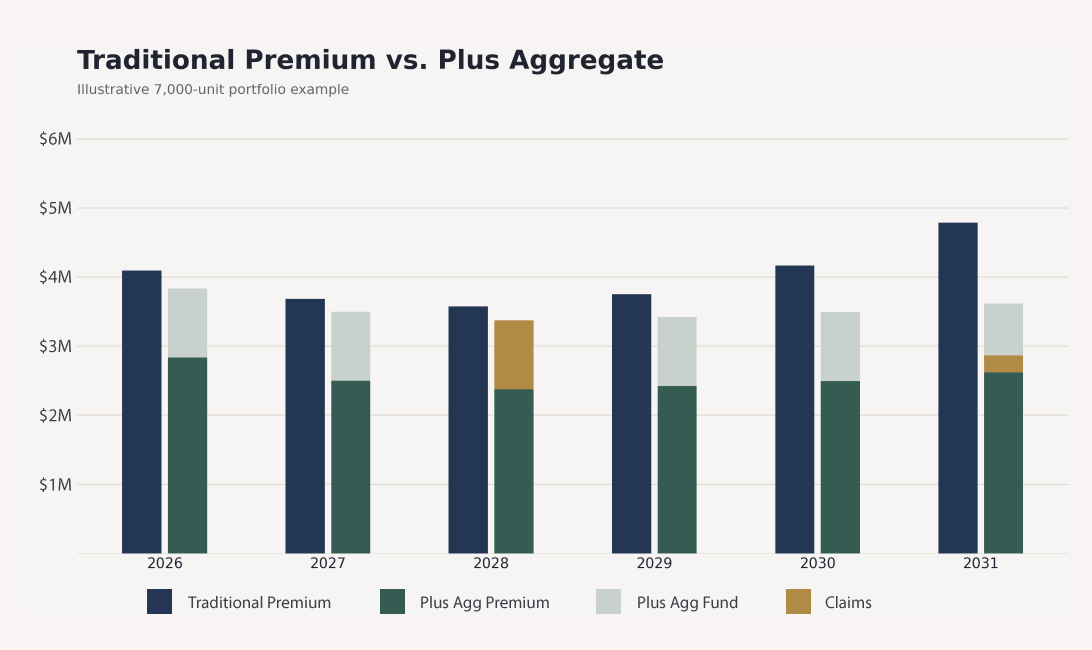
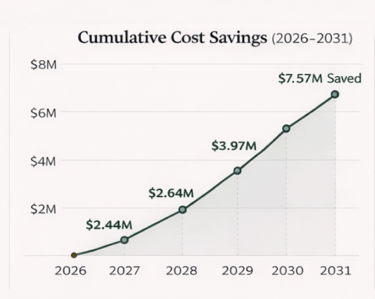
The original model reports:
- Traditional program total: $24,065,774.
- Plus aggregate program total: $16,492,280.
- Claims paid from the allocated layer: $1,249,995.
- Difference between the modeled totals: $7,573,494.
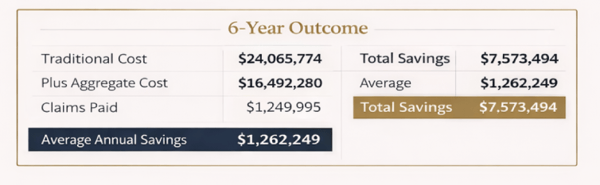
These figures depend on the model’s premium and loss assumptions. They are not guaranteed savings, actual client results, or a complete projection for another portfolio. Different loss experience or pricing can change the outcome materially. The charts do not establish that future premiums will remain predictable.
Questions to resolve before choosing a structure
Ask your team to compare the full terms and cash requirements of each option:
- Which losses count toward the aggregate, and which remain outside it?
- How do per-occurrence deductibles, exclusions, limits, and catastrophe provisions interact?
- When must funds be paid or replenished, and what happens to unused funds?
- Who handles claims, and what reporting does the owner receive?
- How does the comparison change in a year with materially higher losses?
Compare the tradeoff for your portfolio
A plus aggregate deserves evaluation when an owner is considering retaining more risk. The decision should reflect the portfolio’s loss history, financial capacity, property mix, and the actual terms offered.
Talk with our Real Estate team about comparing premium, retained losses, and funding requirements together. View the original archived article.